




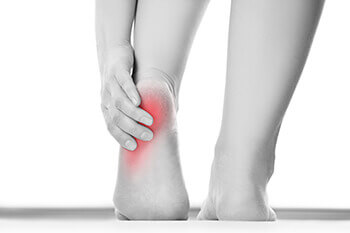
 Have you ever gotten up from a chair or out of bed in the morning, and upon taking that first step, feel like your heel has stepped on a tack? Many people experience a feeling of sharp pain which radiates into their arch from their heel and which does not allow them to put their heel on the floor. Sometimes they need to sit back down, stand only on their toes and use the wall for balance. If you can take a few steps, it seems to go away and lessens, allowing you then to resume your activity. Later, throughout your day and after a period of rest, it can happen again. If this sounds familiar you may be suffering from your first attack of heel pain.
Heel pain is a debilitating condition that affects day to day activities. Running and walking both causes stress on the heel because the heel is the part of the foot that hits the ground first. This means that the heel is taking on your entire weight. Diagnosis and treatments for heel pain can be easily found through your podiatrist.
Plantar Fasciitis
One of the main causes of heel pain is a condition known as plantar fasciitis. The plantar fascia is a band of tissue that extends along the bottom of the foot, from the toe to the bottom of the heel. A rip or tear in this ligament can cause inflammation of these tissues, resulting in heel pain. People who do not wear proper fitting shoes are often at risk of developing problems such as plantar fasciitis. Unnecessary stress from ill-fitting shoes, weight change, excessive running, and wearing non-supportive shoes on hard surfaces are all causes of plantar fasciitis.
Achilles Tendonitis
Achilles tendonitis is another cause of heel pain. Similar to plantar fasciitis, inflammation of the Achilles tendon will cause heel pain due to stress fractures and muscle tearing. A lack of flexibility of the ankle and heel is an indicator of Achilles tendonitis. If left untreated, this condition can lead to plantar fasciitis and cause even more pain on your heel.
Heel Spur
A third cause of heel pain is a heel spur. A heel spur occurs when the tissues of the plantar fascia undergo a great deal of stress, leading to a separation of the ligament from the heel bone entirely. This results in a pointed fragment of bone on the ball of the foot, known as a heel spur.
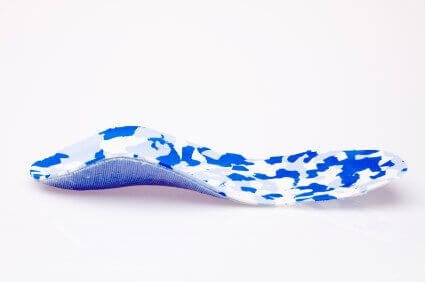 Ankle and foot orthotics, known as AFOs, are custom-made inserts, shaped and contoured to fit inside a shoe and used to correct an irregular walking gait or provide cushioning. Orthotics come in a variety of different models and sizes, including both over the counter and customizable variants. Customizable ones should be prescribed through a podiatrist who specializes in customized footwear and orthotics design and management.
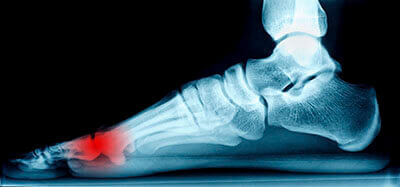 Morton's neuroma is a painful foot condition that commonly affects the areas between the third and fourth toe and the ball of the foot. Other areas of the foot can also be susceptible to this condition. Morton’s neuroma is caused by an inflamed nerve in the foot that is being squeezed and aggravated by surrounding bones. Women are more likely than men to have an occurrence of this foot condition. When a person has Morton's neuroma, it can feel as if they are walking on stones or marbles.
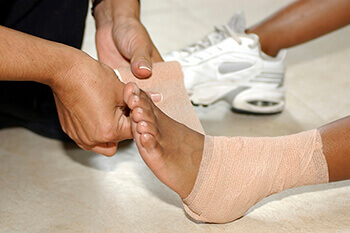 Ankle sprains can be quite the painful experience. Often times the injured person will experience limited mobility, swelling, and, depending on the severity, discoloration of the skin. This type of injury takes place when the ligaments are torn or stretched beyond their limits. Although this can occur in various areas of the body, the ankle is the most common site for a sprain.
 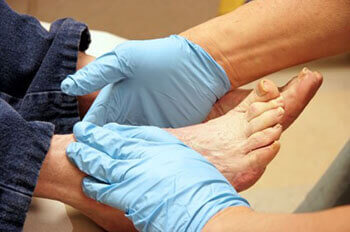 Diabetes affects millions of people every year. Blood vessels located all over the body are damaged due to diabetes—even the blood vessels of the feet. Neuropathy, or nerve damage, can result from slower blood flow in the legs and feet. In diabetic patients neuropathy is very important to monitor, as diabetics are at risk for developing ulcers.